How to Use the Zerodha MCP Server for Agentic Trading
Connect Zerodha Kite to AI agents using the Model Context Protocol. Learn the mechanism, limitations, and setup for automated financial workflows in 2026.

You are staring at a system prompt in Cursor, attempting to explain the intricacies of the Kite Connect API documentation to a Large Language Model that keeps hallucinating the endpoint parameters. After several failed attempts to get your agent to fetch a simple Nifty 50 LTP or execute a bracket order, it becomes clear that manual prompt engineering for financial APIs is a bottleneck you cannot afford to maintain.
Implementing the Zerodha MCP server solves this by providing a standardized interface that allows AI models to call Kite Connect functions directly. This protocol removes the need for custom integration code, enabling agents to read real-time market data and place orders through a unified schema that the AI understands natively. This guide will enable you to decide between a local or hosted deployment and provide the diagnostic steps to verify your environment has successfully ingested the Zerodha toolset.
Since its emergence as a core component of the Agentic Finance movement in 2025, the Zerodha MCP server has matured into a reliable bridge for automated execution in 2026. You will learn how to bypass the rate-limiting risks associated with free-tier AI accounts and establish a stable connection that allows your agents to act on market movements without manual intervention. This setup ensures your trading infrastructure is built on a standardized client-server architecture rather than fragile, custom-coded scripts.
Key takeaways
- The Zerodha MCP server acts as a secure bridge between the Kite Connect API and AI agents like Claude or Cursor.
- Free-tier AI users will likely hit message limits within 2-3 interactions when using financial MCP tools.
- The Model Context Protocol (MCP) standardizes how trading agents fetch real-time market data and execute orders.
- SkillGild can host these MCP servers to remove the overhead of local environment configuration for developers.
Try it on a real task: Academic Plotting is free for 25 runs a month.
#Table of contents
- The Zerodha MCP server bridges Kite Connect and AI agents
- Standardized protocols replace custom trading scripts
- Free tier limits restrict agentic trading frequency
- Local vs hosted MCP server deployments
- Identify your environment to verify connection stability
- The ecosystem has matured since the 2025 launch
- Social validation confirms broad developer adoption
- Frequently asked questions
- Choose Your Path for Agentic Execution
#The Zerodha MCP server bridges Kite Connect and AI agents
Connect the Kite Connect API to Large Language Models (LLMs) using the Zerodha MCP server to avoid writing bespoke integration code for every trading function. This server exposes Zerodha’s capabilities directly to an AI agent. The system relies on the Model Context Protocol (MCP) introduced by Anthropic in late 2024, which provides a consistent framework for models to interact with external tools and data sources.

Apply this unified protocol to give an AI agent the ability to read real-time market data, check portfolio holdings, and place orders without mapping every API endpoint manually. The server translates the LLM’s tool-calling logic into the specific structured requests required by Kite Connect. This architecture allows the agent to function as an autonomous participant in the market. It shifts the developer's workload from maintaining glue code to defining the agent's high-level strategy and operational constraints.
To implement this bridge, connect your Kite Connect credentials to an MCP-compliant host. These credentials require a paid API subscription that should be verified on the official Zerodha portal. This setup enables the agent to treat trading functions as native capabilities. If you need to distinguish between simple automated responses and fully autonomous market participants, reading Claude Skills vs Agents, Commands & Plugins clarifies how these models manage complex toolsets. Once the bridge is active, the agent monitors price action and executes trades based on dynamic reasoning.
#Standardized protocols replace custom trading scripts
The Model Context Protocol (MCP) establishes a structured client-server relationship between an LLM-based agent and the Zerodha Kite Connect ecosystem. In this architecture, the AI agent functions as the client, while the Zerodha MCP server acts as the host providing specific tool definitions and resource templates. Instead of requiring a developer to write thousands of lines of glue code to connect an agent to a broker, the MCP server advertises its capabilities, such as fetching market quotes or placing orders, in a format the agent understands natively. This standardization ensures that any MCP-compliant agent can discover and execute trading functions without manual intervention.
By connecting to the Zerodha MCP server, developers eliminate the need to manually prompt-engineer API schemas into the agent’s system instructions. Traditionally, an agent required a detailed description of every JSON endpoint, including required headers and data types, to avoid hallucinating invalid requests. The MCP server automates this by providing a machine-readable manifest of tools. When the agent needs to check a margin requirement or modify a stop-loss order, it queries the server for the correct schema, receives the exact parameters required, and executes the call. For developers seeking deep technical specifications on these integrations, the AI Agent Skills API, CLI & MCP Reference provides the necessary documentation for advanced configuration.
This shift to a protocol-based approach moves the burden of maintenance from the trading script to the server definition. If Zerodha updates a specific endpoint or adds a new order type, the developer only needs to update the MCP server instance. The agent, upon its next connection, automatically recognizes the updated toolset. This decoupling prevents the "brittle script" syndrome, where small changes in a broker's API documentation would previously break an entire automated strategy. The reliability of such ecosystems is reflected in the Google LLC copyright 2026 notice found on major video platforms hosting modern development tutorials.
To implement this, a user points their MCP-compatible agent, such as Claude Desktop or a custom-built autonomous loop, to the Zerodha MCP server executable. Once the connection is handshake-verified, the agent gains a "toolbox" of trading actions. These actions are executed within a secure context where the server handles the authentication tokens and rate-limiting logic, allowing the agent to focus entirely on the logic of market analysis and execution. This architecture ensures that the agent never sees the raw API keys, as it only interacts with the standardized tool interfaces exposed by the server.
#Free tier limits restrict agentic trading frequency
Connect the Zerodha MCP server to a high-capacity Large Language Model (LLM) to ensure stable agentic trading. While the Model Context Protocol (MCP) standardizes interactions with the Kite Connect API, the AI provider's subscription level often creates a bottleneck. Avoid running trading agents on free tiers. These systems cannot sustain the continuous data exchange required for live market monitoring or complex order execution, which leads to immediate failure.
Allocate higher resource quotas for financial agents than for standard chat tasks. As noted on a platform where Zerodha has 622,273 followers on LinkedIn, using the free tier of Claude with MCP can trigger usage limits within two to three messages. This makes the free tier unsuitable for strategies requiring more than a single point-in-time query. Verify current rate limits and message quotas on the provider’s pricing page before deploying an automated script, as these policies change frequently.
Manage high-context financial data carefully. When an agent requests market depth, open positions, or historical OHLC (Open, High, Low, Close) data through the Zerodha MCP server, the resulting JSON payloads consume tokens rapidly. In an agentic loop, the model must reason through multiple steps, such as checking a balance, calculating a position size, and then placing an order. The token count compounds with each turn. On a free plan, the LLM will trigger a cooling-off period almost immediately, effectively pausing the trading strategy during a live market session.
Switch to a paid subscription or an API-based billing model to keep the agent responsive throughout the trading day. This investment prevents "rate limit reached" errors during the processing of dense technical documentation and real-time data streams required for autonomous operation. To move past basic testing and into a production-ready setup that handles high message volumes, follow a guide like SkillGild for AI Agents: CLI & MCP Setup. This resource provides the technical foundation for managing these agentic workflows effectively.
#Local vs hosted MCP server deployments
Deploying the Zerodha MCP server locally requires a dedicated environment running Node.js or Docker to host the bridge between the Kite Connect API and the trading agent. This traditional approach grants the developer full control over the execution runtime and data residency. However, it necessitates manual configuration of environment variables, API keys, and security certificates. The user must also manage the lifecycle of the server process, ensuring it remains active during market hours and restarts automatically following system failures or network interruptions.
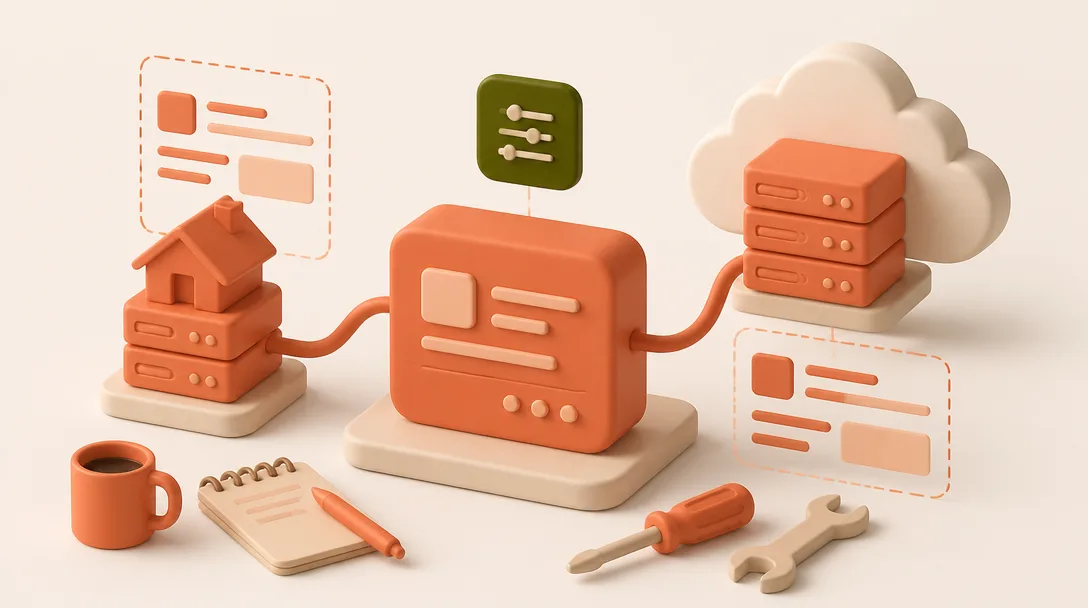
Hosted skill platforms like SkillGild offer an alternative by treating the Zerodha MCP server as a managed service rather than a local script. This model addresses the common inefficiency where developers repeatedly rebuild the same integration logic for different agentic projects. By using a hosted skill, the agent connects to a pre-configured endpoint that handles the protocol translation and authentication overhead. This shift allows the developer to focus on the trading strategy logic rather than the maintenance of the underlying communication layer.
Reliability depends on the stability of the connection between the Model Context Protocol and the financial exchange. A local setup is susceptible to local hardware failures, power outages, and version mismatches during Node.js updates. Managed platforms mitigate these risks by providing redundant infrastructure and automated updates to the MCP implementation. For professionals architecting a broader suite of agentic tools, understanding the nuances of managed versus self-hosted endpoints is critical; those expanding their stack should consult Choosing an MCP Server for Jira Integration in 2026 for a detailed comparison of these deployment strategies in enterprise contexts.
The decision between these two paths involves balancing operational overhead against direct control. Local deployments involve no external subscription fees, though they incur costs in time and hardware maintenance. Hosted solutions typically operate on a subscription or per-call basis, and users should confirm the current pricing tiers and API rate limits on the vendor's website before committing to a production workflow. While local setups remain popular for highly sensitive or low-latency proprietary configurations, hosted skills provide a faster route to market for most agentic trading applications.
| Feature | Local MCP Setup | SkillGild Hosted Skill |
|---|---|---|
| Infrastructure | User-managed Node.js or Docker | Managed cloud environment |
| Maintenance | Manual patches and updates | Automated platform updates |
| Scalability | Bound by local hardware limits | Elastic cloud resource allocation |
| Configuration | Manual environment variable setup | Dashboard-based skill activation |
| Secret Management | Local .env or vault files | Encrypted hosted secret storage |
#Identify your environment to verify connection stability
Confirm that the host application has parsed the Zerodha configuration file to verify the Model Context Protocol (MCP) handshake. Ensure the zerodha-mcp-server process is active in the background to maintain a stable agentic trading setup. If the server fails to initialize, check for an incorrect path in the claude_desktop_config.json or an expired API secret. Without this initialization, the trading agent cannot access the schema needed to execute orders or fetch market depth, which renders the integration inert.
Open the developer console in Claude Desktop and check the "Tools" log to verify the connection. Look for the registration of the Zerodha toolset, specifically identifiers like get_holdings, place_order, and get_quotes within the ingested schema. If these tools are missing or the log shows a "connection refused" error, verify that the Kite API key environment variable is present and correctly scoped. For technical details on how these protocols interact with the model, refer to Anthropic: Claude Skills and Agent Skills to assist with troubleshooting complex agentic behaviors.
Monitor the Output console in Cursor to verify the connection when using it as your primary IDE. Select the "MCP" tab in the output panel to view real-time communication with the Zerodha server. Confirm the connection by looking for the JSON-RPC initialization sequence without trailing stack traces. Check that the "Features" list contains Zerodha-specific function calls to ensure schema ingestion. If the console is blank or times out, verify that the Node.js or Python runtime is correctly mapped in the system environment variables. This check is necessary because the required runtime depends on the specific server implementation used. Stability is confirmed only when the console displays a "Ready" state, allowing the LLM to call Kite Connect endpoints reliably.
#The ecosystem has matured since the 2025 launch
In late 2025, automated trading in India changed with the introduction of standardized Model Context Protocol (MCP) implementations. Early documentation, such as the Zerodha Kite AI Engineer dive published on October 22, 2025, provided the first technical blueprint for bridging Large Language Models (LLMs) with the Kite Connect API. At that time, the server was primarily a tool for experimental developers looking to bypass the constraints of traditional library wrappers.
By 2026, this niche utility has evolved into a foundational layer for the "Agentic Finance" movement. The Zerodha MCP server now functions as a reliable interface that allows autonomous agents to interpret market data and execute trades without constant manual oversight. It has moved beyond simple script execution to support complex, multi-step reasoning across brokerage accounts. This maturation ensures that the protocol handles the authentication and rate-limiting logic required for professional-grade stability in high-stakes environments.
To use this matured ecosystem, professionals must treat the MCP server as the primary bridge between their reasoning engine and the Zerodha infrastructure. Current deployments focus on providing agents with real-time access to order books and portfolio holdings, enabling them to act as sophisticated co-pilots or fully autonomous executors. Users should verify the latest API pricing and specific subscription tiers on the official Kite Connect website, as these details change periodically and impact the viability of high-frequency agentic workflows.
#Social validation confirms broad developer adoption
Implementing the Zerodha MCP server places a developer within one of the largest retail brokerage ecosystems in the world., Zerodha maintains a massive professional network, evidenced by 622,273 followers on LinkedIn. This scale ensures that the underlying Kite Connect infrastructure is battle-tested by thousands of concurrent users, reducing the technical risk of encountering unaddressed edge cases when deploying autonomous trading agents.

Specific interest in AI-driven connectivity is a sustained trend within this community rather than a recent experiment. A formal announcement detailing how to connect Zerodha to AI assistants with Kite MCP was published one year ago, garnering 174 likes and 11 comments. This level of engagement from the developer community confirms that the transition toward agentic models is a shared objective among Zerodha’s user base, providing a foundation of peer-validated implementation strategies.
Choosing a well-supported tool minimizes the technical debt associated with maintaining custom API wrappers. With the ecosystem continuing to evolve through 2026, as reflected in the latest developer resources and video guides, developers can rely on the fact that the MCP server is part of a mature product roadmap. This institutional and community backing allows traders to focus on refining their agent’s logic rather than the stability of the connectivity layer. Users should regularly check the official Kite Connect forums for recent community-driven scripts and updates to ensure their agentic systems remain compatible with the latest API versions.
#Frequently asked questions
#How do I connect Zerodha Kite to Claude AI?
Install the MCP server locally and add the server's executable path to your Claude Desktop configuration file. This configuration allows the Claude interface to discover and call Zerodha tools directly through the Model Context Protocol. You must also set your Kite API credentials as environment variables to ensure the server authenticates your session automatically upon startup.
#Is the Zerodha MCP server safe for live trading?
The server is safe for live execution provided you implement strict logic guards and manual approval steps within your agent's workflow. It utilizes the standard Kite Connect infrastructure, inheriting the same encryption and security protocols used by traditional trading scripts. To mitigate risks, always validate your agentic prompts in a simulated environment before granting the server full order-placement permissions.
#Do I need a Kite Connect API subscription to use the MCP server?
You must maintain an active Kite Connect API subscription to generate the API Key and Secret required by the server. The MCP server serves as a standardized bridge for the API, so it cannot function without the underlying data and execution access provided by a paid Zerodha developer account. This requirement persists whether you choose a local or hosted deployment for your trading agent.
#Can I use the Zerodha MCP server with Cursor or VS Code?
You can integrate the server with Cursor or VS Code by adding the server's entry point to the MCP settings within your IDE’s AI extension. Once linked, your AI coding assistant gains the ability to pull real-time market data and suggest or execute trades directly from your workspace. This integration streamlines the development cycle by combining code generation and live market interaction in one interface.
#Choose Your Path for Agentic Execution
- Assess trading frequency. Determine whether your strategy demands high-frequency execution or if simple periodic rebalancing is sufficient for your goals.
- Evaluate hosting infrastructure. Decide between maintaining a local server for maximum privacy or deploying to a cloud provider for 24/7 reliability.
- Review API constraints. Check if your Kite Connect subscription tier allows for the polling frequency your agent needs to function effectively.
- Verify protocol compatibility. Confirm that your specific LLM or agent framework supports the standardized Model Context Protocol to ensure direct interoperability between data sources and the model.
- Audit security measures. Ensure that your Zerodha API keys and sensitive credentials are encrypted and stored in a secure environment variable manager.
The Zerodha MCP server has become a foundational tool for Indian traders, offering a standardized way to bypass fragile custom scripts. While the technology simplifies the connection, you should never deploy an agent to live markets without first running extensive simulations in a paper-trading environment to observe how the agent handles API timeouts. Skillgild provides the technical blueprints and community support necessary to build resilient, production-grade agentic trading systems. Visit Skillgild.dev to download our latest implementation guide and start scaling your automated strategy today.