Share an OpenSpec change as a private review link: specs shown as archive would write them, per-requirement approvals without an account, conflicts with other open changes, and checks validate misses.
SkillGild film about the skill, made with Brag; the page and data are the live review link
Gallery
SkillGild film about the skill, made with Brag; terminal output is from the real CLI · Screenshot of the live review page · Still from the SkillGild film; output from the real CLI
What you get
A private review link for any OpenSpec change, readable by people who never open a terminal
Each requirement shown added, modified, removed or renamed, with a line diff against the current main spec
The full main spec as `openspec archive` would write it, and a warning when archive would refuse the change
Approve, request changes or comment on each requirement, or on the whole change, with no account needed
Conflicts with other open changes that touch the same requirement, found before either one is archived
Checks that `openspec validate` passes: scenarios without WHEN/THEN, missing SHALL/MUST, and vague wording like "fast" or "user-friendly"
Revisions on the same link: approvals carry over for unchanged requirements and are marked outdated where the text changed
Your agent reads the decisions back and holds apply or archive until the change is approved
Is it a good fit?
Good for
Teams using OpenSpec where product managers, clients or leads sign off on behavior before code is written
Several agents or developers working on parallel OpenSpec changes in one repository
Anyone who wants a human approval step between /opsx:propose and /opsx:apply
Not for
Projects that do not use OpenSpec
Code review of the implementation; this reviews the specs and plan
Confidential specs that must not leave your machine: the link stores the change on SkillGild for 30 days
Requirements
An OpenSpec project (openspec init) with at least one open change
A coding agent that can read files and use the SkillGild MCP server: Claude Code, Codex, Cursor or Gemini CLI
Reviewers need only a browser and the link
Install the OpenSpec Review skill
Pick your agent. The wrapper only tells your agent how to start a session. The skill's instructions arrive with each session, after your access is checked.
Register the SkillGild MCP server with Claude Code.
Terminal
claude mcp add --scope user skillgild -- $(command -v skillgild) mcp
How it runs
Your agent starts a session. SkillGild checks your access and allowance, counts one run, and sends the skill's instructions for this task.
Your agent does the work with its own model and tools, in your project. SkillGild makes no AI model call.
Private steps run on SkillGild. Your agent calls the server tools below and gets their results. The tool code never leaves SkillGild, and tool input is not stored.
Use it from code
Start a session, call its tools, then end it. Create an API key under Account and pass it as a bearer token.
Terminal
# Prints the session ID, its tools and the instructions for your agent
skillgild session openspec-review
skillgild call <session-id> preview_review --input '{"change_name":"add-password-reset","title":"Replace security questions with email reset","proposal":"## Why\nUsers who forget their password are locked out and must contact support, and security answers are easy to guess.\n\n## What Changes\n- Add password reset by email\n- **BREAKING** Remove security questions\n","tasks":"## 1. Reset\n- [x] 1.1 Add reset token table\n- [ ] 1.2 Send reset email\n","specs":[{"capability":"auth","delta":"## ADDED Requirements\n\n### Requirement: Password reset by email\nThe system SHALL email a single-use reset link that expires 30 minutes after it is sent.\n\n#### Scenario: Known address\n- **WHEN** a user requests a reset for a registered email address\n- **THEN** one reset link is emailed and any earlier link stops working\n\n## REMOVED Requirements\n\n### Requirement: Security questions\n**Reason**: Answers are guessable and support resets them by hand.\n**Migration**: Password reset by email replaces them.\n","current":"# auth Specification\n\n## Purpose\nHow people sign in to the product and recover access to their accounts.\n\n## Requirements\n\n### Requirement: Password sign-in\nThe system SHALL sign a user in with a verified email address and password.\n\n#### Scenario: Correct password\n- **WHEN** a user submits a verified email and the correct password\n- **THEN** a session is created and the user lands on the dashboard\n\n### Requirement: Security questions\nThe system SHALL let a user recover access by answering two security questions.\n\n#### Scenario: Correct answers\n- **WHEN** a user answers both questions correctly\n- **THEN** the user may set a new password\n"}],"other_changes":[{"change_name":"harden-security-questions","specs":[{"capability":"auth","delta":"## MODIFIED Requirements\n\n### Requirement: Security questions\nThe system SHALL let a user recover access by answering three security questions.\n\n#### Scenario: Correct answers\n- **WHEN** a user answers all three questions correctly\n- **THEN** the user may set a new password\n"}]}]}'
skillgild end <session-id>
Server tools
Each call uses one of the session's tool calls.
preview_reviewPreview an OpenSpec change review
Merges the change's delta specs into the current main specs exactly as `openspec archive` would and returns, per requirement, what is added, modified, removed or renamed with before/after text. Also reports where archive would refuse the change, scenarios without WHEN/THEN steps, vague wording, and requirements that other open changes also touch. Stores nothing.
FieldTypeNotes
change_nameRequiredstringUp to 120 characters
specsRequiredarrayNo extra rules.
designstringUp to 60000 characters
other_changesarrayNo extra rules.
proposalstringUp to 60000 characters
tasksstringUp to 60000 characters
titlestringUp to 200 characters
publish_reviewPublish an OpenSpec review link
Builds the same review as preview_review and publishes it as a private link that anyone holding it can read and approve, request changes on or comment on, per requirement or for the whole change, without a SkillGild account. Pass review_id to publish a new revision to the same link; approvals of requirements whose text changed become outdated. Refuses a change that `openspec archive` would refuse. Links expire after 30 days.
FieldTypeNotes
change_nameRequiredstringUp to 120 characters
specsRequiredarrayNo extra rules.
designstringUp to 60000 characters
other_changesarrayNo extra rules.
proposalstringUp to 60000 characters
review_idstringNo extra rules.
tasksstringUp to 60000 characters
titlestringUp to 200 characters
get_review_feedbackRead review decisions
Returns the review's overall status (approved, changes_requested or in_review), each requirement's current decision and every comment, newest last. Decisions made on an earlier revision of a requirement that has since changed are marked outdated.
FieldTypeNotes
review_idRequiredstringNo extra rules.
delete_reviewDelete a review link
Deletes a review link you published, with its change content and all feedback. The link stops working immediately.
FieldTypeNotes
review_idRequiredstringNo extra rules.
Questions
How is this different from openspec validate?
validate checks one change's structure on your machine. OpenSpec Review shows the specs as archive would write them, diffs each requirement against the current spec, finds requirements other open changes also touch, flags untestable scenarios and wording, and collects approvals from people who do not use OpenSpec.
Do reviewers need a SkillGild account?
No. Anyone with the link can read the review and approve, request changes or comment. They type a name, which is shown with what they send. Share the link only with your reviewers: it is the access control.
What happens to my specs?
Your agent sends the change's proposal, design, tasks and the affected specs. SkillGild stores them for the review link for 30 days, then deletes them with the feedback. Your agent can delete a link sooner. No AI model reads them on SkillGild.
Does it run an AI model on SkillGild?
No. Merging, diffing, overlap detection and the checks are deterministic code on SkillGild's servers. Your own agent reads the files and acts on feedback with your AI provider.
Is OpenSpec Review free?
Yes. Free skills include 25 runs a month, reset on the 1st; one session is one run and covers publishing, revisions and reading feedback within it. Your agent's own model usage is billed by your AI provider, not SkillGild.
Related guides
Setup steps and worked examples for this kind of skill.
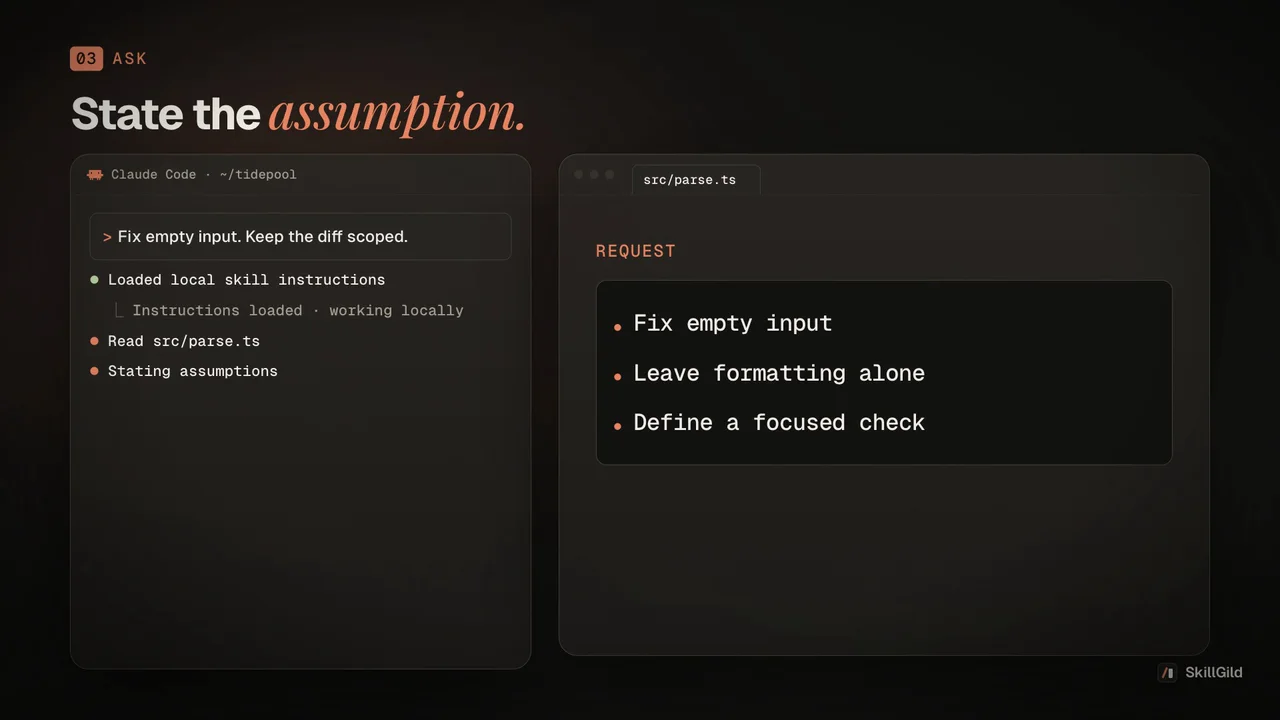
Karpathy's observations on how LLMs fail at coding, codified into four rules the agent follows: think before coding (state assumptions, ask instead of guessing), simplicity first, surgical changes, and goal-driven execution.
A large community collection: 380+ skills, 30+ agents and 70+ commands for Claude Code, Codex, Gemini CLI, Cursor and other agents, organised by job (engineering, marketing, product, compliance, C-level advisory, research, finance, operations, daily productivity).
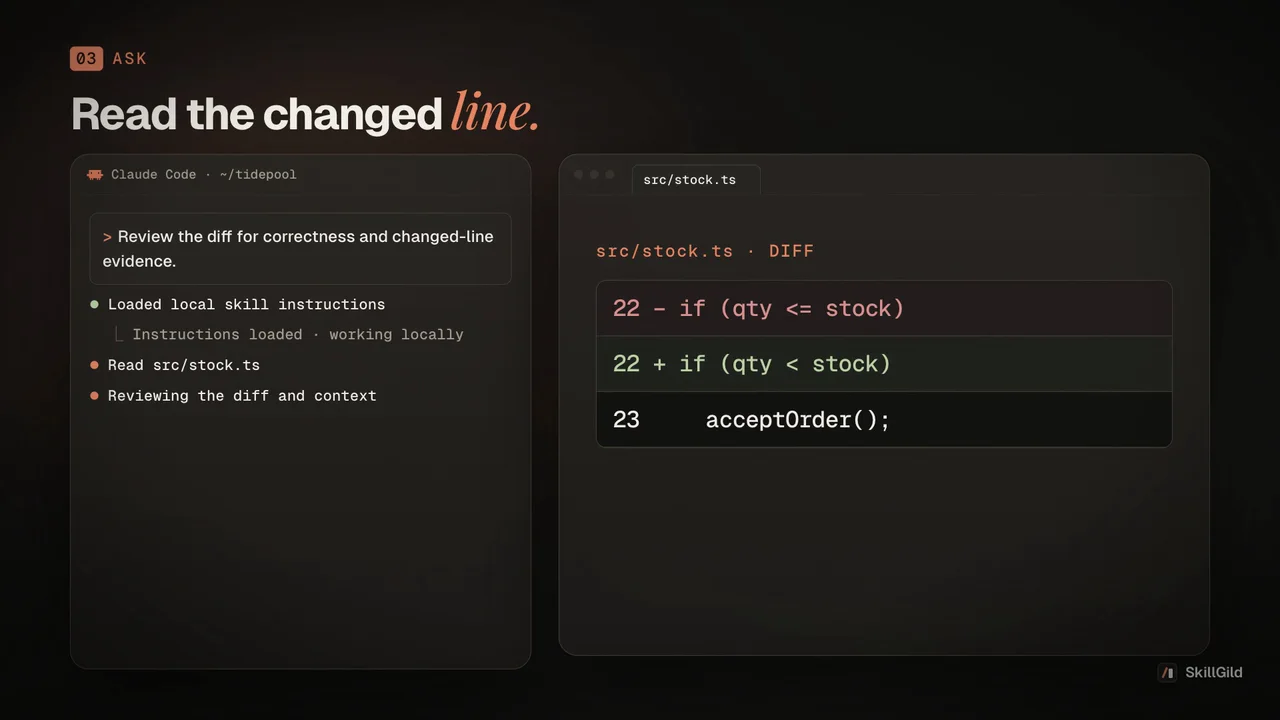
Anthropic's official code-review plugin for Claude Code: runs a structured review of a diff or pull request for correctness, standards and spec adherence and reports findings with locations and severity.
Anthropic's official plugin that adds commit, push and pull-request commands to Claude Code: /commit-commands:commit writes a conventional message from the diff, pushes, and can open the PR.
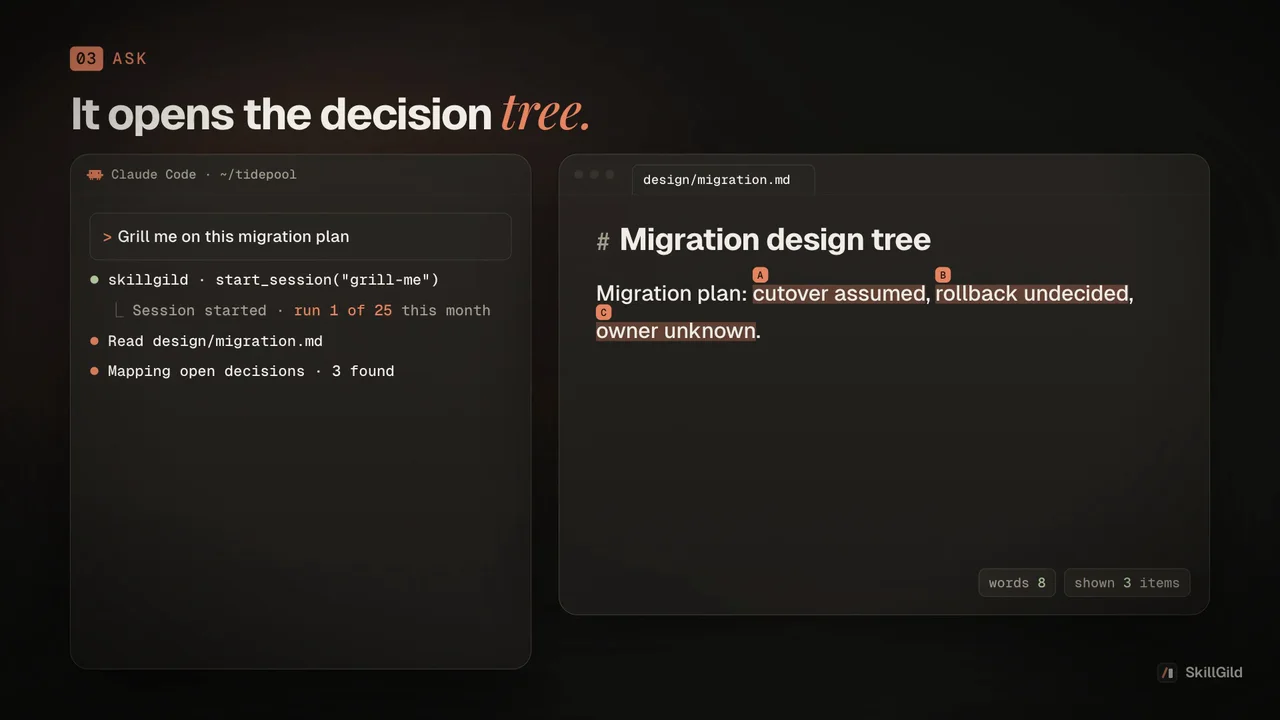
Makes the agent interview you about a plan or design, one question at a time with a recommended answer attached, until every branch of the decision tree is resolved and you both share the same understanding.
A context-engineering framework that runs Claude Code through a disciplined phase loop (new-project or onboard, plan-phase, execute-phase in parallel waves, verify-work, ship) with research and execution in fresh-context subagents so the main session never rots.
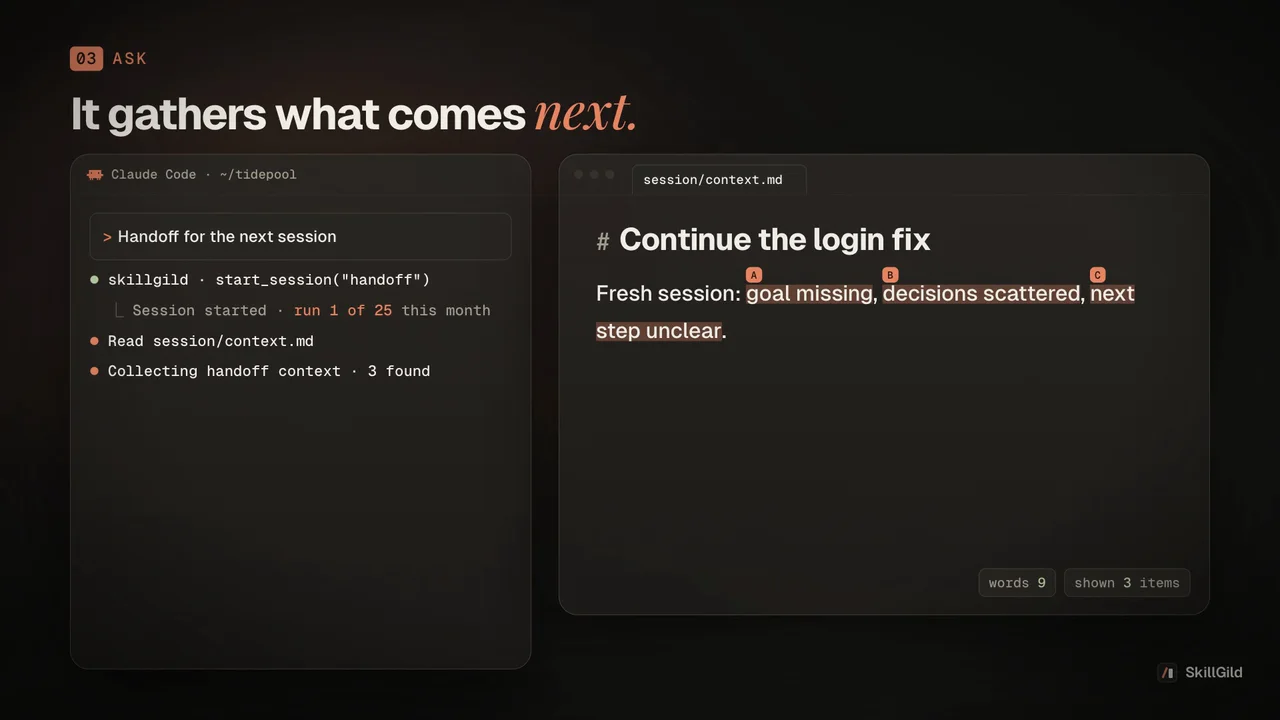
Compacts a long conversation into a handoff document another agent (or a fresh session) can continue from: the goal, decisions made, current state, open questions and the exact next step.
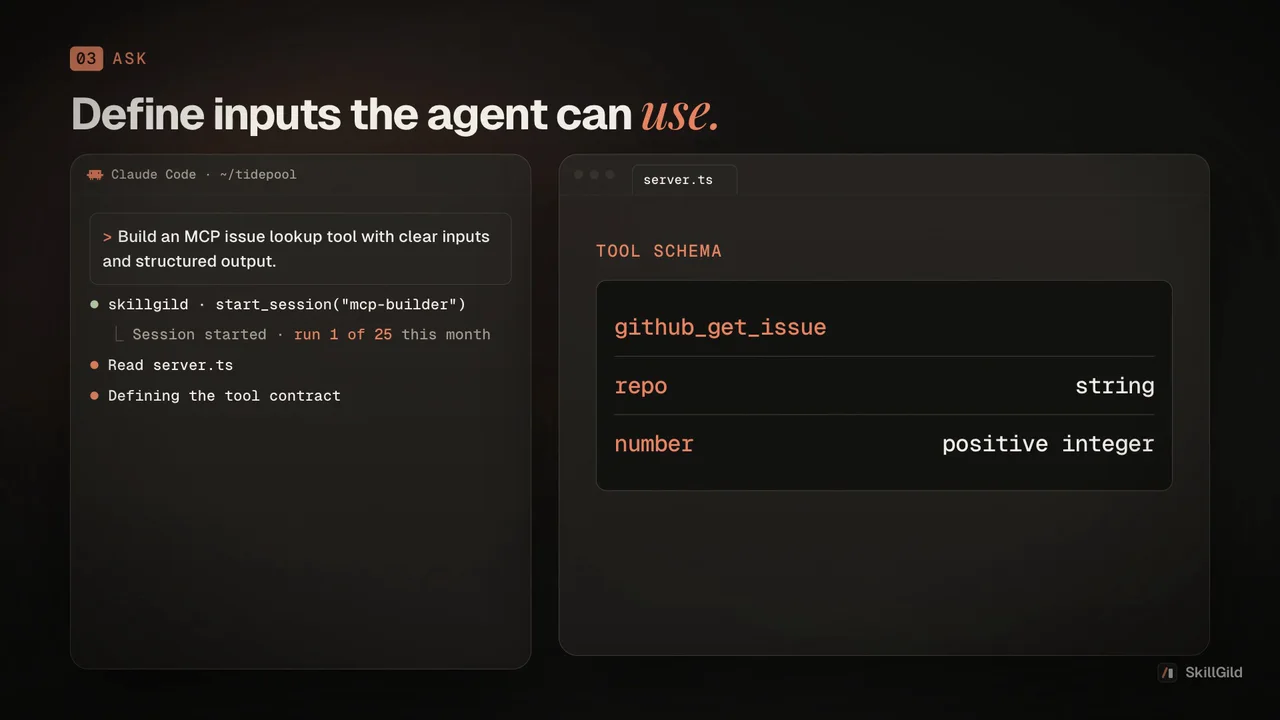
Anthropic's skill for building MCP servers: it walks the agent through tool design, schemas, transports and testing so the server it generates follows the Model Context Protocol correctly and works in Claude Code, Cursor and Codex.
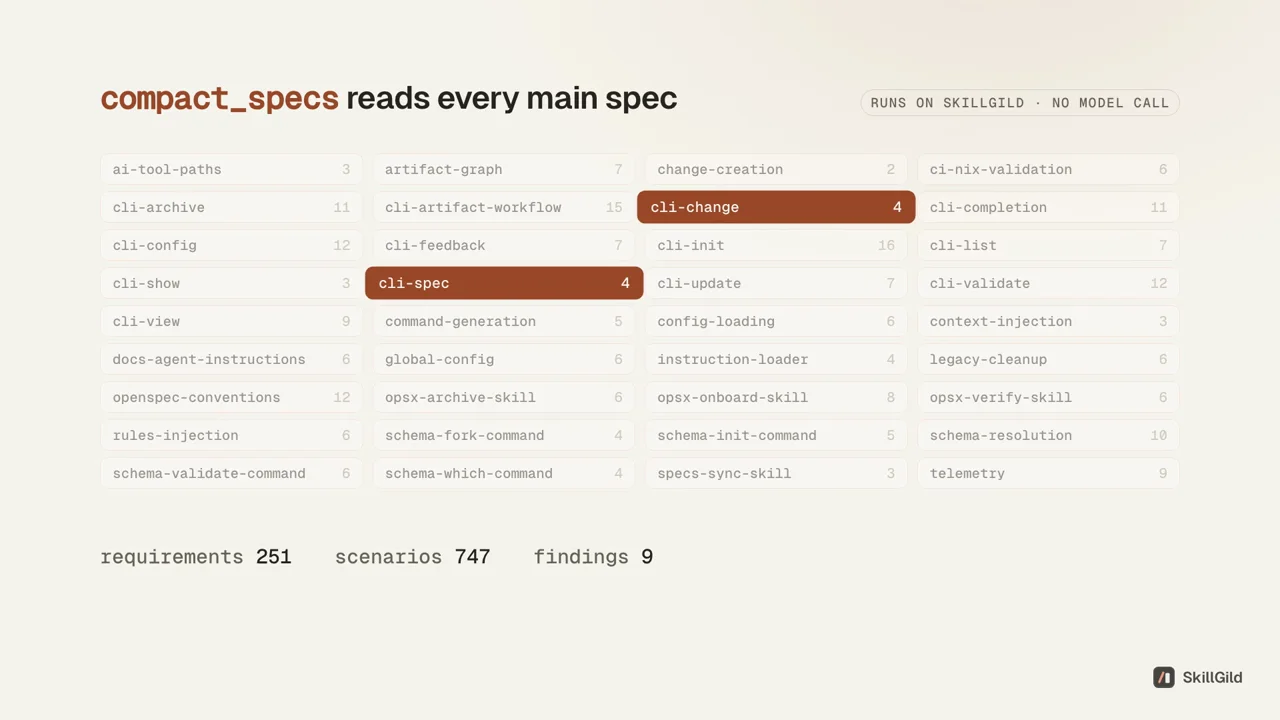
Compact a project's OpenSpec main specs: find requirements specified twice, scenarios pasted under several requirements and leftovers from archive, then write the cleanup as one reviewable OpenSpec change.
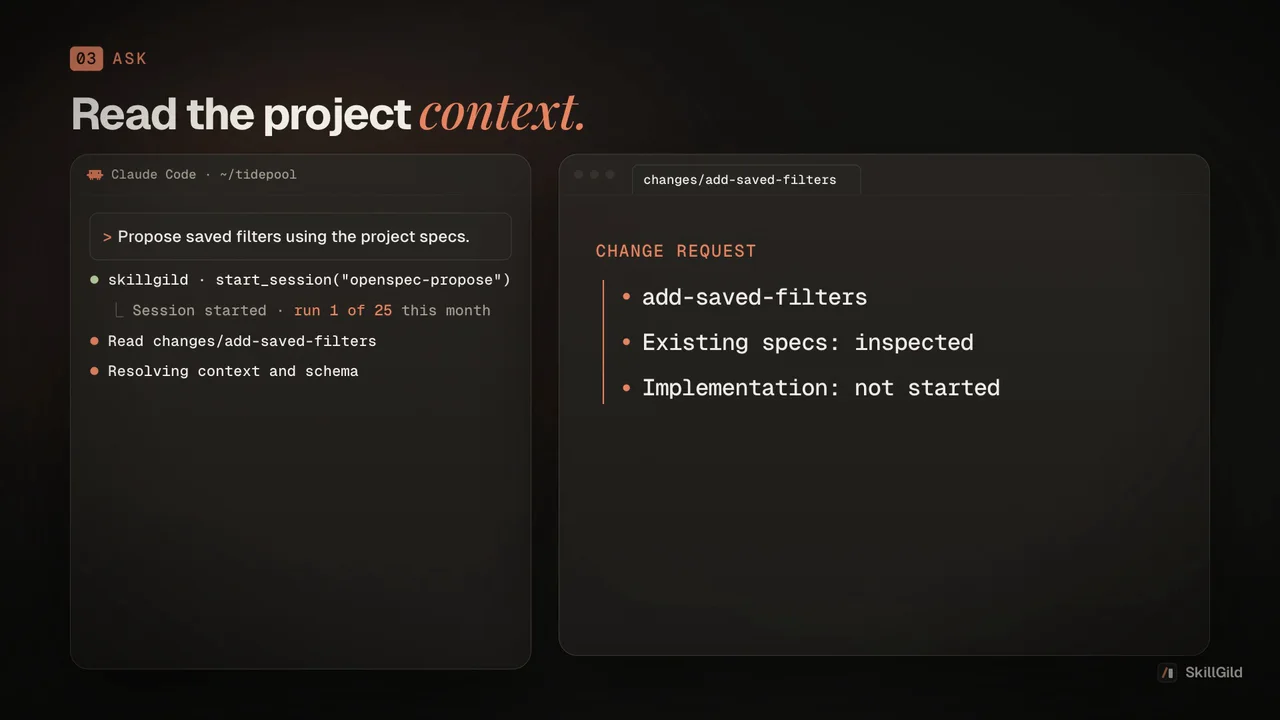
Turn a feature request into an OpenSpec change before any code is written: proposal, delta specs, design and implementation tasks, grounded in the project's existing specs.